
"Low downtime" is the line, and a doctor's version of it, "very low downtime", commits to a short recovery without saying how short. The number it turns on is one to three days, depending on how the laser is titrated.
The sentence as published
A doctor quoted on www.newbeauty.com says: "For most people, Moxi has very low downtime—depending on how you titrate it, it can be one to three days."
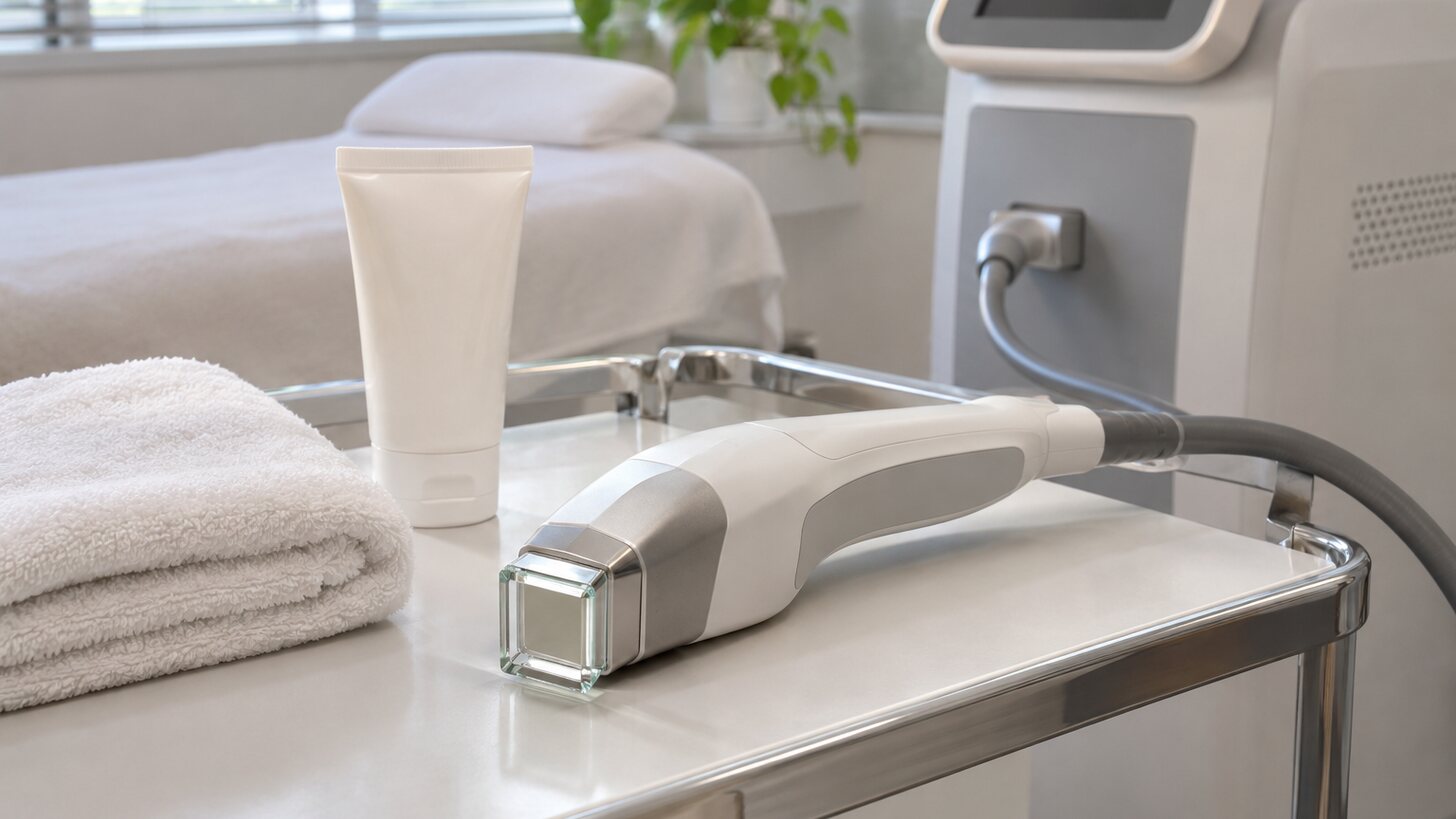
The sentence carries a range, one to three days, and two hedges. "For most people" excludes some readers without naming them. "Depending on how you titrate it" ties the days to a setting chosen by the provider, so the range is not a property of MOXI alone.
What the wording leaves out
- It does not say what a reader should expect on the days outside "most people".
- It does not say which setting gives one day and which gives three.
- It does not say what the skin looks like during those days.
- It does not say whether "downtime" means time off work or time until the skin looks ordinary.
The my.clevelandclinic.org page on carbon dioxide laser resurfacing covers a different procedure, so its recovery wording should not be borrowed to fill these gaps.
What you can confirm on your own
Ask what "downtime" means on the page that uses the word. A figure of one to three days can only be compared across sources when each source defines the word the same way. For redness as a separate topic, aad.org maintains its page on rosacea diagnosis and treatment, and it should be read as its own document.
The question to put in writing
Ask the provider to state in writing which setting they plan to use for you and how many days they expect you to need before you look ordinary. The source says the number depends on the titration, so the question to put to the provider is who chooses it and when.