
"Spots will fade" is the promise on most menus. The sentence that follows it, when there is one, says something less comfortable: they may look worse first.
The sentence as published
The wording on www.newbeauty.com is: "The pigment gets darker initially, turns a little toasty and then peels off."
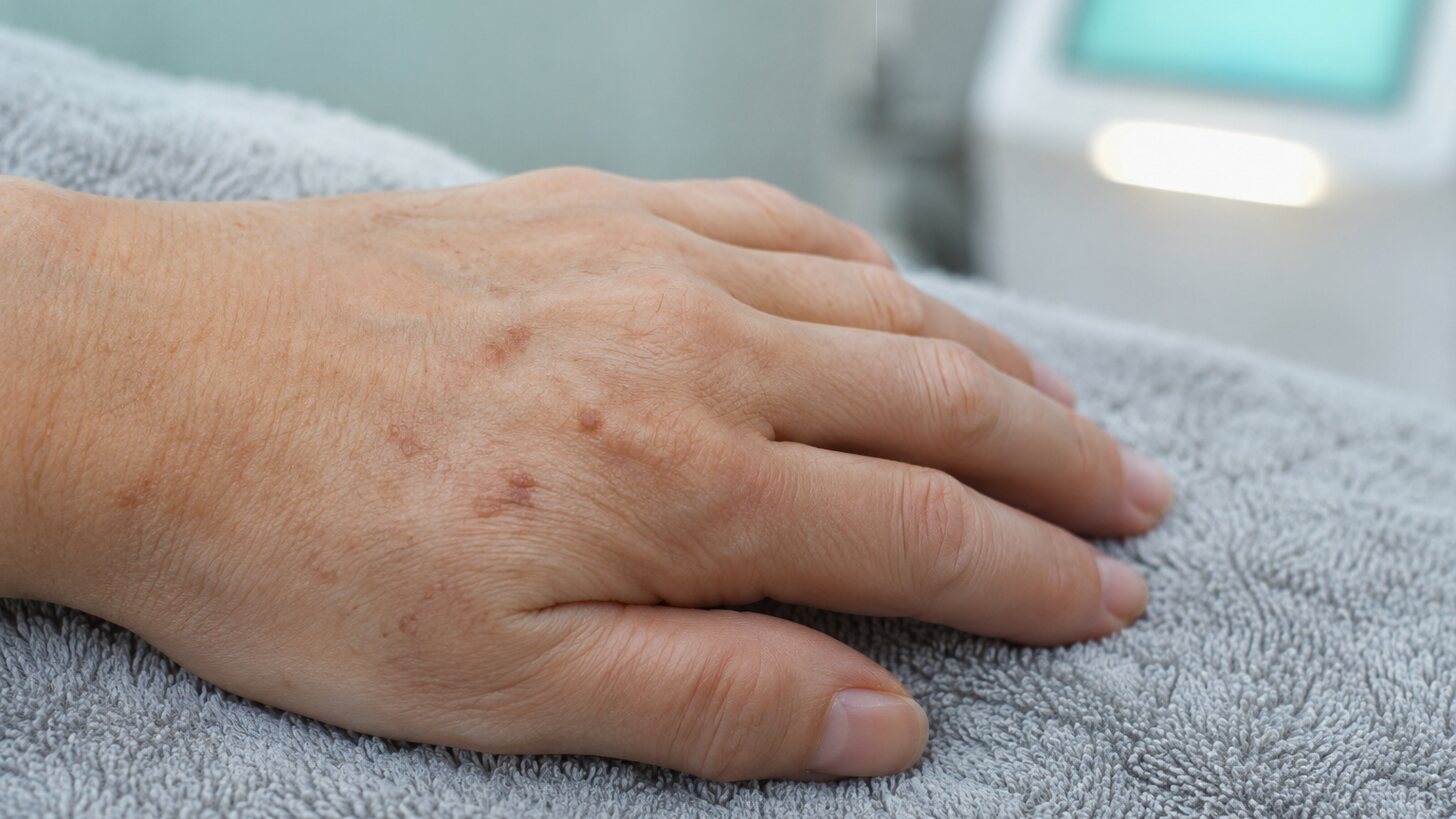
The sentence describes three stages in order: darker, "a little toasty", then peeling. It sets no dates against them. It describes the pigment and says nothing about the surrounding skin.
What the wording leaves out
- It does not say how long the darker stage lasts.
- It does not say how long the peeling takes.
- It does not say what "a little toasty" looks like on a given face.
- It does not say whether the spot is gone once it has peeled.
Each gap is a place where a reader's expectations can drift from the source. For a different procedure, the my.clevelandclinic.org page on carbon dioxide laser resurfacing sits outside the treatments this journal covers, so its timing should not be borrowed for this one.
What you can confirm on your own
Look at the order of events on the page you are reading. A source that lists the darker stage before the fading stage is describing a sequence, and a menu that mentions only fading has dropped the first step. Redness is a separate matter, and aad.org keeps its page on rosacea diagnosis and treatment apart from any treatment sequence. The same separation is a useful habit here.
The question to put in writing
Ask the provider to describe in writing what the treated spots will look like at each stage, and by what day they expect each stage to start and end. Put the sentence from www.newbeauty.com beside their answer and see whether the two agree.